
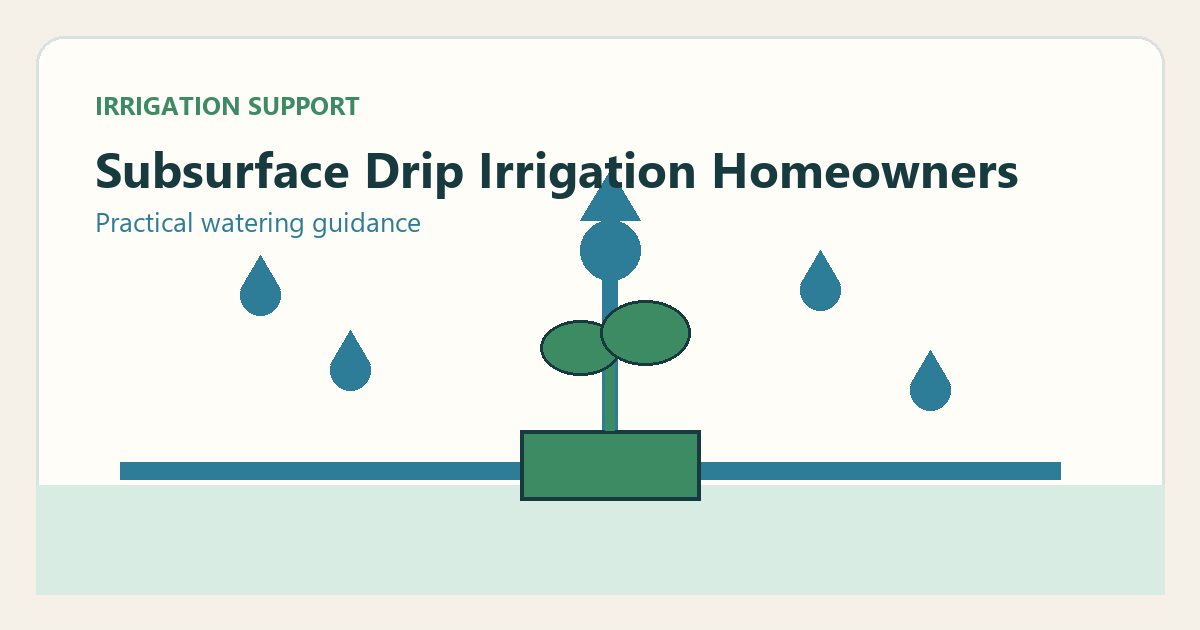
Subsurface drip irrigation delivers water directly to the root zone through buried drip lines, 4-12 inches below the soil surface. Unlike surface drip, SDI eliminates water loss from evaporation and keeps the soil surface dry, reducing weed growth. It is the most water-efficient irrigation method available.
What is subsurface drip irrigation and how does it work?
What are the benefits of subsurface drip irrigation?
SDI uses 30-50% less water than sprinklers and 15-25% less than surface drip. No water contact with leaves means lower disease pressure. Systems last 10-15 years with proper filtration. Invisible installation preserves landscape aesthetics.
How deep should you bury subsurface drip lines?
For lawns: 4-6 inches deep, 12-18 inches between lines. For vegetable gardens: 6-8 inches deep, 18-24 inches between rows. For shrubs: 8-12 inches deep.
For clay soils: shallower placement. For sandy soils: deeper with closer spacing.
What are common subsurface drip irrigation problems?
Root intrusion is the most common issue. Use drip tape with Treflan herbicide embedded in the emitter. Clogging from silty water requires 150+ mesh filtration.
Gophers can chew through lines underground. Install hardware cloth above the drip tape during initial installation. Drip emitter types guide pc non pc adjustable Related: Sprinkler Head Popping Up But No Water Coming Out: Complete Fix
Disclosure
Last updated: 2026-07-16T10:00:00. This article contains affiliate links and practical recommendations based on hands-on testing. I may earn a commission when you purchase through these links, at no extra cost to you. All opinions are my own and based on real-world irrigation experience.
Tested & Verified: All product recommendations have been tested in real irrigation systems. Last review date: 2026-07-16T10:00:00.
Troubleshooting Tips
When working with this system, keep these tips in mind:
- Start Simple: Begin with basic diagnostics before moving to complex solutions
- Document Everything: Keep a log of changes and results for future reference
- Safety First: Always shut off power and water supply before making adjustments
- Test Incrementally: Make one change at a time and test the result
Common Mistakes to Avoid
These failure modes are easiest to catch before changing parts or extending the zone.
- Skipping the diagnostic steps
- Assuming the problem is complex when it’s often simple
- Not consulting the manufacturer’s guidelines
- Ignoring safety protocols
These tips are based on 12 years of hands-on irrigation experience.