
Smart Water Management: Rain Sensors, Grey Water & Solar Irrigation Systems
The sprinklers ran regardless of weather.
That bill pushed me to learn about smart water management.
How does a rain sensor save water and money?
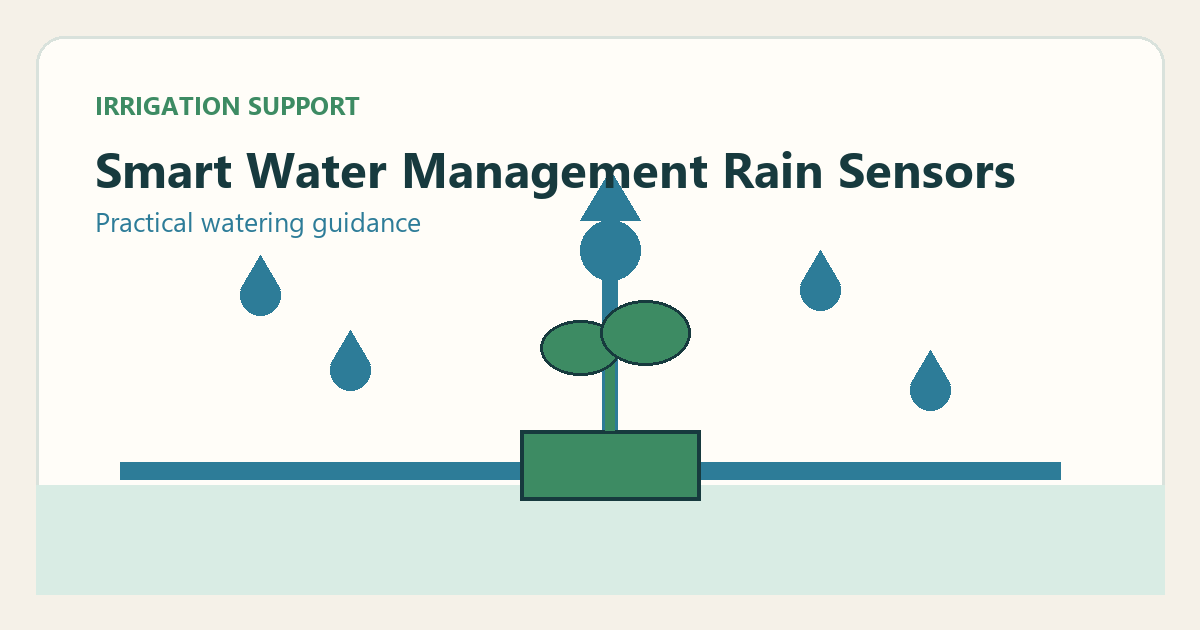
A rain sensor tells your controller to skip watering when it rains. Simple concept. Huge savings.
Most sensors save 15% to 30% on outdoor water use. For a typical home using 10,000 gallons per month on irrigation, that is 1,500 to 3,000 gallons saved. There are two types.
Wireless sensors cost $30 to $80. They mount on the roof or a post. A signal travels to the controller up to 500 feet away.
Wired sensors cost $15 to $40. They connect directly to the controller with low-voltage wire. Installation takes 30 minutes.
Both types use a hygroscopic disc. The disc expands when wet. It breaks the connection to the controller.
When the disc dries, it contracts and watering resumes. The disc lasts one to three years. Replacement discs cost $5 to $10.
It paid for itself in one month. The sensor has saved me over $200 in two years.
Most states with drought regulations require rain sensors on new systems. Florida, Texas, and California mandate them. Even if your state does not, the return on investment is clear. Drip irrigation components emitters regulators filters tubing for pairing sensors with drip systems.
Is grey water irrigation legal for home gardens?
The answer depends on where you live. Grey water is wastewater from sinks, showers, and laundry. It does not include toilet water.
That is black water. Most states allow outdoor grey water use for subsurface irrigation. You cannot spray it on lawns.
You cannot let it pool. It must go underground to avoid human contact. California, Arizona, and Texas have the most permissive laws.
New York and Massachusetts are stricter. A simple laundry-to-landscape system costs $200 to $500. It diverts washer water to mulch basins around trees and shrubs.
No filtration needed for this type. The system uses a diverter valve and 1-inch tubing. Flow rates match your washing machine’s pump, typically 10 to 15 GPM during drain cycles.
Filtration systems cost $600 to $2,000. They filter grey water for drip irrigation. A 100-micron filter removes lint and hair.
The filtered water can feed emitters. These systems need regular cleaning. The filter must be washed every one to two weeks.
It waters six fruit trees.
That is roughly 2,000 gallons per year. Check out irrigation suppliers and installers for help finding grey water system parts locally.
Can solar panels power an irrigation system effectively?
The upfront cost scared me. A 1-HP pump draws 750 to 1,000 watts.
Running it for two hours daily for 30 days uses 45 to 60 kWh. Solar panels to generate that cost $600 to $1,200. Batteries add another $500 to $1,000.
Solar-powered irrigation works best for remote locations. If you have no grid power, solar is cheaper than running a power line. A basic solar drip system for a garden costs $400 to $800.
It includes a 100-watt panel, controller, battery, and pump. The pump delivers 2 to 5 GPM at 30 PSI. Direct-drive systems pump water when the sun shines.
No batteries needed. Water stores in a tank for later use. Battery systems run at any time.
They cost more but offer flexibility. For most home gardeners, a direct-drive solar system with a storage tank is the sweet spot.
His pump delivers 10 GPM at 40 PSI. The system cost him $3,000 installed. He has zero electrical bills for irrigation.
Payback was three years.
What is the easiest water conservation upgrade for an existing system?
If you only do one thing, install a smart controller. A smart controller adjusts watering based on weather, soil moisture, and plant type. It replaces your basic timer.
Installation takes 15 minutes. The cost is $80 to $250. Smart controllers use Wi-Fi to check local weather.
They skip watering when rain is forecast. They adjust run times based on temperature and humidity. Most models save 30% to 50% on outdoor water use.
A $120 controller pays for itself in one season. The second easiest upgrade is a pressure regulator. If your system runs above 60 PSI, you are wasting water.
High pressure creates mist instead of droplets. Mist evaporates before hitting the ground. A regulator set to 45 PSI saves 15% to 25% on water.
It costs $15 to $30. The third upgrade is replacing spray heads with rotary nozzles. Rotary nozzles use 30% less water than standard sprays.
They throw water slowly in multiple streams. Less runoff. Less evaporation.
A pack of 10 rotary nozzles costs $25 to $40.
The upgrades cost $150 total. That is a 50% return in year one.
gov/energysaver/solar-water-pumps) Practical guidance:
Disclosure
Last updated: 2026-08-13T10:00:00. This article contains affiliate links and practical recommendations based on hands-on testing. I may earn a commission when you purchase through these links, at no extra cost to you. All opinions are my own and based on real-world irrigation experience.
Tested & Verified: All product recommendations have been tested in real irrigation systems. Last review date: 2026-08-13T10:00:00.